Here’s what’s actually going on:
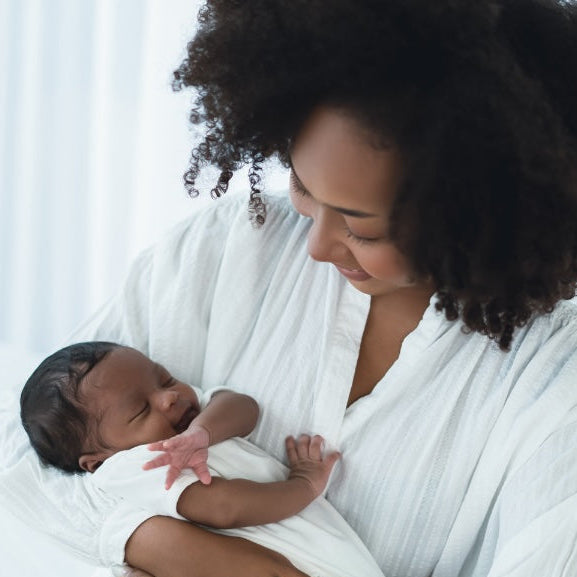
Most parents focus on getting their baby fully asleep before putting them down. But the way your baby is transferred into the crib is often what determines whether they stay asleep or wake instantly.
If the transfer doesn’t match how they fell asleep, their brain registers the change and brings them out of sleep. So if they fall asleep in your arms, but then stir from sleep in a different environment like the crib, they are going to alert you about this - usually by crying!
If this is your daily reality, firstly I just want to honour how well you're doing - it's not easy.
And secondly, there is a clear reason this is happening, and it's not because your baby is broken or difficult!
👉 If your baby wakes the second you put them down, I show you exactly how to fix this step-by-step in my free masterclass.
👉 If you want to know exactly how to help your baby become a great sleeper without leaving them to cry-it-out, our award-winning Sleep Courses walk you through the full method in step-by-step video lessons. Everything you need to feel confident, plus a 30-day money-back guarantee so there's zero risk.
See the Sleep Courses
What your baby has learned
Babies learn through repetition. So whatever conditions are present when they fall asleep at the start of the night or nap become, in their brain, "how I get to sleep".
So if they have consistently fallen asleep being held, or by feeding-to-sleep for example, that is what they associate with falling asleep.
This is not a flaw in your baby. It is actually a sign of a well-functioning brain doing what brains are supposed to do. They have learned the pattern. And right now, being held is the pattern.
👉 If you want a clear plan that fits your baby's exact age and stage, our Sleep Courses break the full method down into short video lessons you can follow at your own pace. No cry-it-out. No guesswork. Just everything you need to go from surviving parenthood to enjoying it. 30-day money-back guarantee included.
See the Sleep Courses
The contact nap is not ruining anything
I want to be clear that there's nothing wrong with contact naps. For newborns especially, being held is biologically normal and developmentally appropriate. Skin-to-skin, warmth and proximity to a parent or caregiver serve a real purpose in the early weeks.
The point at which it becomes something to address is when it stops working for you. When you cannot put your baby down at all. When naps and sometimes nighttime sleep can only happen on you, which means you cannot rest, eat properly or have any time to yourself.
When nights are broken because the same association is required every time your baby surfaces between sleep cycles.
That is when it's worth working on. You as the parent need actual breaks and proper rest too.
What it means for nighttime sleep
This is the connection a lot of parents miss. If your baby has learned that falling asleep requires being held, that is the condition they will look for every single time they come in and out of a sleep cycle, which happens multiple times a night.
It is not that they cannot sleep, it is that they cannot yet return to sleep without recreating the same conditions they started in. The holding is not just for comfort. In their brain, it is "this is how I get to sleep."
This is why when we work on independent sleep with families, we recommend to work on both naps and nights at the same time. The two are connected because they are driven by the same underlying association.
How to start shifting this
The approach I use with families is always responsive. Cry-it-out is not part of what we do. But responsive does not mean slow. Most babies make real progress within a few days when the right age-appropriate method is used consistently.
The three key elements of our method are a well-timed routine, an optimised sleep environment and a clear, consistent settling method for helping your baby learn to fall asleep in their crib or cot, rather than on you.
👉 If you want to know exactly how to help your baby become a great sleeper without leaving them to cry-it-out, our award-winning Sleep Courses walk you through the full method in step-by-step video lessons. Everything you need to feel confident, plus a 30-day money-back guarantee so there's zero risk.
See the Sleep Courses
The goal is not to take away comfort. It is to shift where that comfort comes from, so that your baby can find it independently at 2am without needing you to intervene each time.
When to start
For babies under 3 months, the focus is on laying solid sleep foundations rather than any kind of formal sleep training. Regular bits of practice at crib settling and lots of cuddly contact naps too - with no pressure.
From around 3-4 months onwards, the sleep architecture matures enough to begin working on self-settling in a more formal way.
I am a huge believer in working on sleep from early on though and there is no need to wait if your current sleep situation feels unsustainable. We work with babies from birth right up to 4 years old.
What to do next
If your baby will only sleep when held and you’re ready to change that without leaving them to cry-it-out, the next step is understanding exactly how to shift that pattern responsively and gently.
👉 If you want a clear plan that fits your baby's exact age and stage, our Sleep Courses break the full method down into short video lessons you can follow at your own pace. No cry-it-out. No guesswork. Just everything you need to go from surviving parenthood to enjoying it. 30-day money-back guarantee included.
See the Sleep Courses
Try it completely risk-free. Follow the course for 30 days, and if your baby's sleep hasn't improved, just email us for a full refund. No questions asked. With over 9000 families helped, the only thing you risk is another month of broken nights.